
Navigating Noise Boundary Monitoring in Accordance with DOE Guidelines for Environmental Noise Limits
Noise pollution affects communities, wildlife and the environment in many ways. Managing noise levels around industrial sites, construction zones, and urban areas is essential to protect public health and maintain quality of life. The Guidelines for Environmental Noise Limits and Control Third Edition by the Department of Environment (DOE) offers a clear framework for monitoring and controlling noise at boundary lines. This post introduces the key concepts of noise boundary monitoring based on these guidelines, explaining how to measure, interpret and manage noise effectively.
Understanding Noise Boundary Monitoring
Noise boundary monitoring refers to the process of measuring sound levels at the perimeter of a property or site to ensure compliance with regulatory limits. These boundaries are critical points where noise emissions from a source meet the surrounding environment, often near residential areas, schools, or hospitals.
The DOE guidelines set specific noise limits depending on the type of area (residential, commercial, industrial) and the time of day (daytime, evening, nighttime). Monitoring at the boundary helps identify whether noise control measures are effective and if further action is needed to reduce noise impact.
Why Noise Boundary Monitoring Matters
Protects public health by preventing excessive noise exposure.
Ensures compliance with legal noise limits to avoid penalties.
Supports community relations by addressing noise complaints with data.
Guides noise mitigation efforts by pinpointing problem areas.
Key Elements of DOE Noise Boundary Monitoring
The DOE guidelines provide detailed instructions on how to conduct noise boundary monitoring. Here are the main elements:
1. Selection of Noise Boundary Monitoring Locations
Monitoring points should be chosen at the site boundary closest to noise-sensitive areas. The guidelines recommend:
Selecting locations where noise is likely to be highest.
Avoiding reflective surfaces that could distort readings.
Considering accessibility and safety for monitoring personnel.
2. Equipment and Measurement Procedures
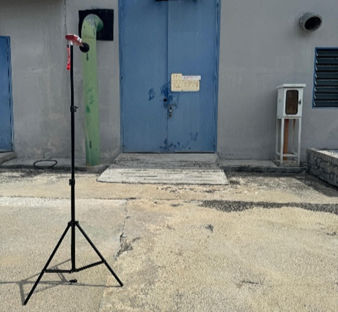
Accurate noise measurement requires calibrated sound level meters that meet international standards such as IEC 61672. The guidelines specify:
Using Type 1 or Type 2 sound level meters.
Measuring noise in A-weighted decibels (dB(A)), which reflect human hearing sensitivity.
Conducting measurements over representative periods, typically 15 minutes or longer.
3. Noise Limits and Time Periods
The DOE sets different noise limits based on land use and time:

4. Reporting and Documentation
The guidelines emphasize thorough documentation of monitoring activities, including:
Date, time and weather conditions.
Equipment used and calibration certificates.
Exact locations of monitoring points.
Noise level readings and analysis.
Practical Steps for Effective Noise Boundary Monitoring
Implementing noise boundary monitoring requires planning and attention to detail. Here are practical steps aligned with DOE guidelines:
Conduct a noise source assessment to identify major contributors.
Develop a monitoring plan specifying locations, times, and frequency.
Train personnel on proper equipment use and measurement techniques.
Perform baseline monitoring before project start to establish background noise levels.
Monitor regularly during operations to detect changes or exceedances.
Analyze data promptly and compare with DOE limits.
Implement noise control measures such as barriers, equipment maintenance, or operational adjustments if limits are exceeded.
Engage with the community by sharing monitoring results and addressing concerns.
Moving Forward with Noise Management
Noise boundary monitoring is a vital tool for managing environmental noise and protecting communities. Following the DOE guidelines helps organizations measure noise accurately, identify problems, and take effective action. Consistent monitoring combined with proactive noise control supports compliance and fosters better relationships with neighbors.
For those responsible for noise management, the next step is to develop a comprehensive noise monitoring program tailored to their site and community needs. Using the DOE guidelines as a foundation ensures that noise limits are respected and environmental quality is maintained.
If you are concerned about the noise your business makes or have received complaints about it, our technicians are ready to carry out full inspections as per the Malaysian Recommended Noise Monitoring Guidelines created by the Department Of Environment. Call us now at 019-4459000 for more details.


Comments